AITHE ALLEN INDEXKANSAS CITY ENCAMPMENT RESPONSE

Kansas City Encampment Response · 2023–2026

200+ sites.
Now 40.
Here's how.

Kansas City replaced reaction with a consistent, safety-driven system — assess the risk, prioritize the highest-risk sites, and coordinate the right response.

See the four-year progress↓

Results at a glance

2023200+known encampments
→
202640known encampments
80%fewer known sites
15/15support-centered sites remain closed
0critical sites today
THE RULE

Risk determines priority. Not complaints. Not visibility.

Scroll to see the story↓

Before the framework

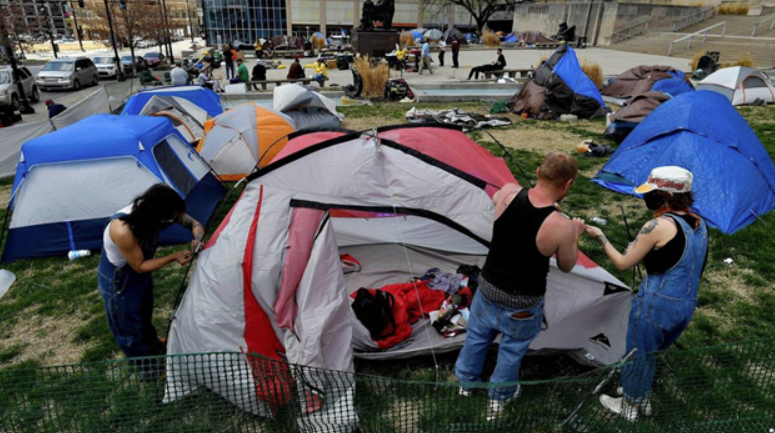
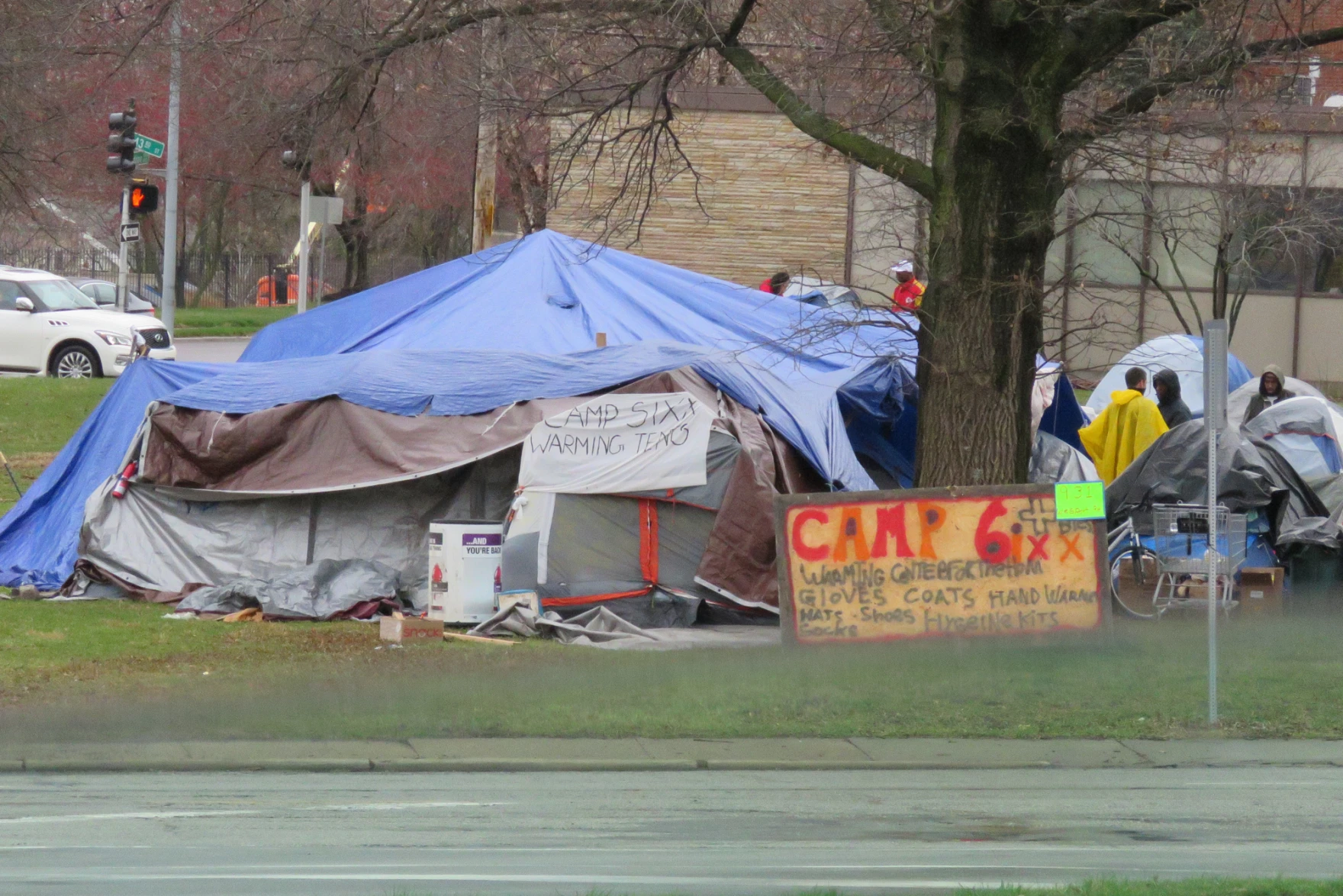
Before there was a shared response, the crisis was visible everywhere.

Kansas City's encampment response once relied heavily on individual complaints, public visibility and disconnected decisions. Large sites grew in wooded areas, along waterways and near civic spaces — without one consistent way to measure danger, prioritize limited resources or coordinate the next step.

THENFragmented response→NOWShared risk framework

These images are a record of the conditions Kansas City was confronting — not a judgment of the people living through them. They show why the City needed a coordinated, housing-focused approach capable of seeing both immediate danger and the human needs behind every site.

See what changed ↓

2023–2026 progress

Four years of focused work

From more than 200 known sites to 40: Kansas City moved from reacting site by site to a coordinated system that identifies risk, prioritizes action and connects people to services.

Known encampments80% fewer200+ in 2023 → 40 in 2026
Large encampments99% fewer75 in 2023 → 1 in 2026
Critical sites today0Three sites currently score High
First pilotOCT2023

Kansas City's largest interdepartmental site coordination at the time

One site became the proving ground for a coordinated response.

Using the Allen Index, City departments and community partners coordinated around a site where more than 30 people slept overnight and well over 100 people gathered throughout the day.

30+people sleeping overnight
100+people present throughout the day
1shared interdepartmental response
OutcomeSTILL CLOSEDTo date
PROVE→BUILD→SCALE→SUSTAIN
2024
Build

A shared risk framework

The pilot became a consistent 0–100 prioritization system focused on serious injury and loss of life.

12/12sites scoring above 80 experienced a fatality within two weeks
2025
Scale

Systematic response

Outreach, housing, public safety, health and infrastructure partners aligned around shared scores and response pathways.

176completed sweeps, decommissions and support-centered closures
2026
Today

A smaller, lower-risk landscape

The remaining sites are smaller, and none currently score Critical.

40known sites1large site0critical sites
✓

Every Clearance & Closure with Support site remains closed. The October 2023 pilot site — and all sites completed through this coordinated model — have remained closed to date.

Today's 40 sites by size

15sleeping spots, 2–3 people25other sites, generally small

Today's Allen Index profile

0Critical3High37Medium + Low

How to read this progress: The numbers describe known sites at each point in time. Encampments change as people move, enter shelter or housing, or new sites are identified. The Allen Index is a prioritization tool — not a prediction of individual behavior or a substitute for professional judgment.

The Allen Index

One score. Four levels of urgency.

The Allen Index helps the City answer one question: which sites face the greatest likelihood of serious injury or loss of life?

What the score does

Creates a consistent, risk-based starting point for prioritizing limited outreach, housing and public-safety resources.

01LocationSite size, jurisdiction and surrounding conditions
02PeopleAge, health, exploitation and violence risks
03EnvironmentWaste, sharps, vermin and hazardous materials
04SafetyFire, traffic, infrastructure and access hazards
Explore the full Allen Index methodology ↗
Move the score to explore68
LowMediumHighCritical

Score 51–75

High

Eligible for Clearance & Closure with Support, subject to current site conditions and supplemental assessments.

Starting responseClearance & Closure with Support

The score starts the decision. Documented stakeholder assessments and current site conditions help determine the final response.

Response matrix

How score and site conditions work together

Read across each row. The score provides the baseline response; documented stakeholder conditions can justify a different response category.

Primary pathwayPossible with supplemental assessmentNot the standard pathway
Allen Index
Outreach & monitor
Clearance & Closure with Support
Decommission
Sweep
Low1–25
Primary●
—○
—○
—○
Medium26–50
Primary●
—○
Possible◆
Possible◆
High51–75
—○
Primary●
Possible◆
Possible◆
Critical76–100
—○
—○
Primary●
Primary●
1

Start with the score

Low and Medium sites begin with outreach. High sites are eligible for Clearance & Closure with Support.

2

Add documented stakeholder conditions

KCPD calls for service, a Land Bank property need, MoDOT infrastructure concerns or a comparable documented factor can support reclassification.

3

Use a sweep only for immediate safety

For Medium or High sites, a sweep remains a last-resort response when an immediate public-safety threat is confirmed.

Critical score: 76–100

Act quickly. Build the response around the risk.

Critical sites are categorized for a decommission or sweep. The City uses a rapid, strategic multidisciplinary approach to protect site and community safety while doing everything reasonably possible to connect residents with services.

Critical conditions→Strategic DecommissionorLast-resort Sweep
  • Outreach and housing navigation
  • Behavioral health and medical support
  • Public safety and transportation
  • Infrastructure and property partners

Completed actions

Response by type

Each pathway reflects a different level of urgency, notice and support. Totals show verified completed actions.

Immediate danger65

Sweeps

Used when a confirmed condition creates an immediate threat to life or public safety.

TimingImmediate
Expedited response96

Decommissions

Used for significant health or safety concerns that require timely action and allow a brief notice period.

TimingShort notice
Planned response15

Clearance & Closure with Support

Repeated outreach, partner planning, housing connections and follow-up are built into the closure.

TimingCoordinated
Housing pathway—

Housing Gateway sites

A coordinated pathway connecting residents to housing, navigation and stabilizing services.

TimingIntensive support

A verified Housing Gateway site total has not yet been supplied for publication.

From report to resolution

How the system works

  1. 1

    Report received

    A resident submits a concern through 311. The report is reviewed and routed to the right department.

  2. 2

    Site documented

    Staff confirm the location, record conditions and distinguish an encampment from a temporary sleeping spot.

  3. 3

    Risk assessed

    Trained assessors apply the Allen Index consistently across location, vulnerability, environmental health and safety.

  4. 4

    Response matched

    The score and confirmed conditions determine urgency and guide the appropriate response pathway.

  5. 5

    People connected

    Outreach and navigation teams work with residents on shelter, healthcare, documents, benefits and housing.

  6. 6

    Site closed & monitored

    Partners coordinate cleanup, closure and follow-up while continuing to support people who remain unhoused.

Understanding 311 reports

Not every report involving an unhoused person is an encampment request.

1,792311 reports containing unhoused individuals
31%551 reports

Specific to encampments and unsheltered needs

69%1,241 reports

Involved weapons, violence, crime or illegal activity that should be addressed by law enforcement

Multiple reports may refer to the same person, location or event. These are reports — not unique encampments.

Need to report a concern?

Use 311 for non-emergency encampment concerns.

Call 911 for an immediate threat to life or safety. A 311 report helps the City document and route a concern; it does not automatically trigger a closure.

Submit a 311 request ↗