Encampment Response Strategy

The Allen Index

A prioritization tool used to determine which encampments require the most urgent response, based on risk to human life and community safety. Developed by the City of KCMO Division of Unhoused Solutions, aligned with ZeroKC, HUD, and USICH frameworks.

📋
Report
📊
Assessment
🎯
Priority Score
Response Determination

Risk Assessment Scale

Each encampment is scored on a 100-point scale based on the likelihood of bodily harm or premature fatality. The score determines urgency of response and resource allocation.

Low
Moderate
High
Critical
Low
1–25
Moderate
26–50
High
51–75
Critical
76–100

Site Assessment Domains

Domain 01
Location Characteristics
  • Number of persons on site
  • Development district jurisdiction
  • Neighborhood complaints
  • Visibility to general public
  • Degree of nearby criminal activity
Domain 02
Vulnerability of Population
  • Perceived elderly (65+)
  • Infants / children on site
  • Physical & behavioral health issues
  • Prostitution or human trafficking
  • Physical violence among members
  • Drug sales on site
Domain 03
Environmental Health
  • Presence of vermin
  • Hazardous materials
  • Biowaste & human waste
  • Loose sharps / used needles
  • Standing water
  • Excessive solid waste
Domain 04
Community Safety
  • Camping in public parks or sidewalks
  • Evidence of open fires
  • Near bridge / highway ramp
  • Near heavy traffic
  • Near facilities for children
  • Hazardous site access
Allen Index
Total Score
0 OUT OF 100
Low Moderate High Critical

Three Size Categories

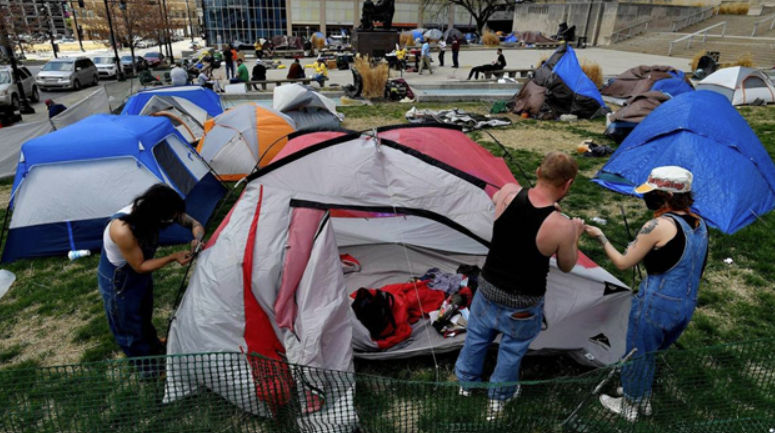
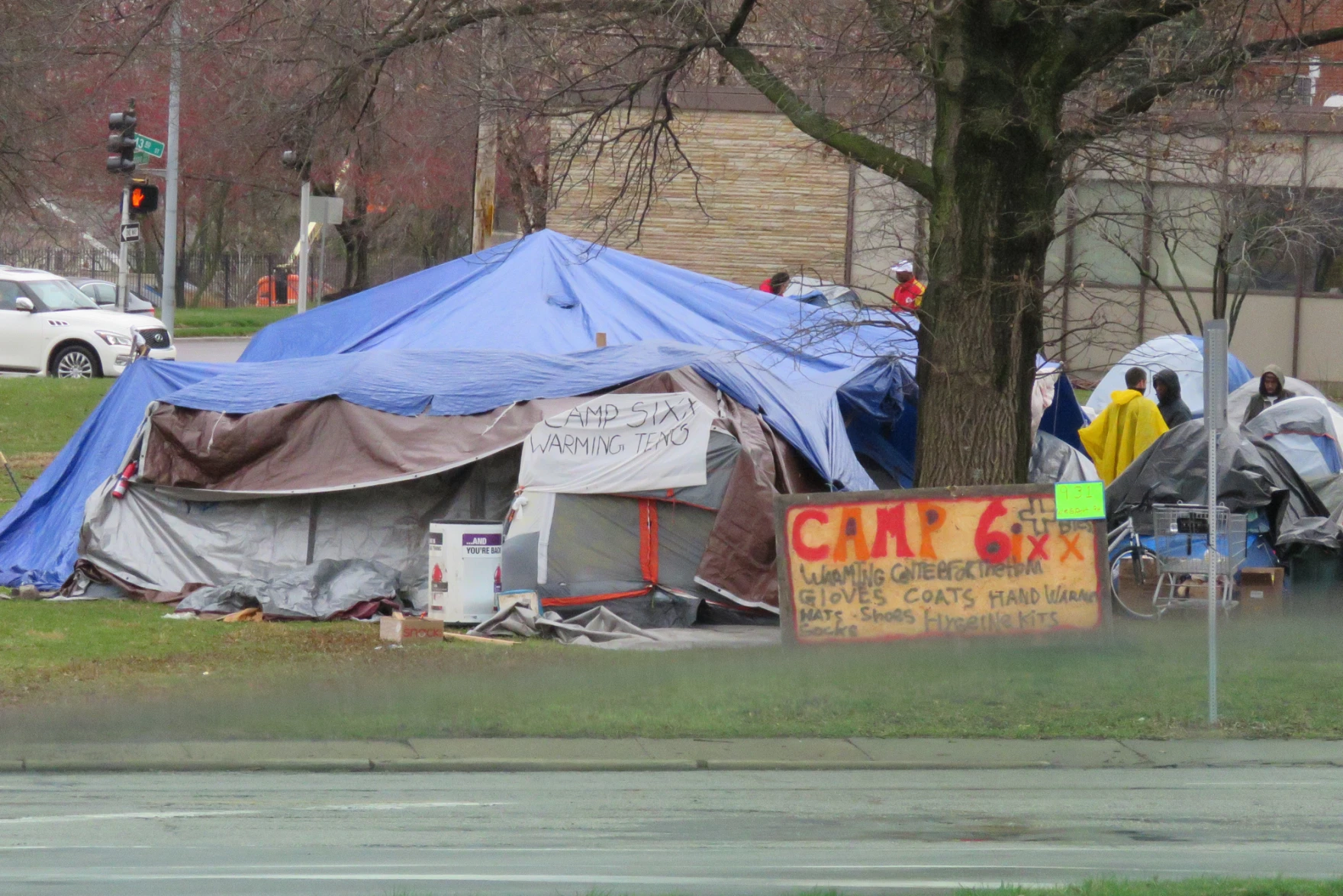
Approximately 3,000 people experience unsheltered homelessness in Kansas City. Encampments are organized into three size categories to guide appropriate response strategies.

Priority Response
Large Encampment
10+
persons in a definable location
Structures for sustained habitation
Trash piles, cooking fires, shopping carts
Full decommissioning protocol triggered
Coordinated Response
Small Encampment
3–9
persons in a definable location
Structures present for habitation
Evidence of sustained presence
CORE outreach engagement
Monitoring
Sleeping Spot
1–3
people in a definable location
Evidence of bedding down
No sustained presence (<1 week)
STW documentation & follow-up

Four Core Components

Kansas City's encampment response strategy pairs intensive outreach and engagement with a coordinated housing event to connect every resident to housing before clearance and closure.

🤝
Intensive Outreach & Engagement

Housing-focused case management by skilled outreach teams to ensure every encampment resident has a permanent housing strategy.

🏘️
Project Outreach Connect

Resource-intensive housing fair to match all encampment residents with an interim housing placement or pathway to permanent housing.

🏗️
Clearance

Removing structures and belongings from encampments after all residents have been engaged and housing strategies activated.

🚪
Closure

Requiring that people leave encampments, supported by an official notice of closure posted to prevent re-occupation and enable enforcement.

Three Enforcement Response Types

The Allen Index score determines which enforcement response type is applied. Each type carries a different level of urgency, notice period, and resource deployment.

Immediate
Sweep
Immediate Safety Concern

Reserved for encampments that pose an immediate threat to human life or public safety. No advance notice period — response is activated as soon as the safety concern is identified and confirmed.

Notice Period None — Immediate
Surge Event Not Required
📋
Expedited
Decommission
Expedited Encampment Response

Applied to encampments with significant safety or health concerns that require timely action but allow for a short notice window. Residents are given 72 hours to vacate with connections to available services.

Notice Period 72-Hour Notice
Surge Event Not Required
🏠
Planned
Clearance & Closure with Support
Planned Encampment Response

The most comprehensive response type. A full two-week engagement and planning period precedes closure, culminating in a coordinated Surge Event (Project Outreach Connect) to connect every resident to housing before the site is cleared.

Notice Period 2-Week Notice
Surge Event Required

Response Timeline

A structured multi-week process ensures every encampment resident is connected to housing before clearance and closure occurs.

72 Hours
Site Inspection
Complete visual inventory of site. Identify number of structures and likely inhabitants. Flag major safety complexities — traffic congestion, illegal activity, gang presence. Update report status in Show the Way.
10 Days
Site Assessment
Complete the full Allen Index site assessment. Document all five domains. Brief outreach teams. Confirm proposed timeline for Project Outreach Connect. Identify involved departments.
2 Weeks Out
Comprehensive Engagement
Outreach teams initiate engagement. Confirm dates for Project Outreach Connect. Identify preliminary client counts for each housing type (Diversion, RRH, PSH). Document individual housing needs. Estimate shelter beds.
1 Week Out
Intensive Planning
  • Outreach teams continue engagement
  • Final briefing with CORE and all partners
  • Develop Client By-Name List
  • Confirm inhabitant notification of closure
  • Confirm staff roles for Housing Surge Week
  • Secure KCATA transportation commitment
Event
Project Outreach Connect (Housing Surge)
All partners deploy. Outreach, housing navigation, transportation, legal, health, law enforcement, and solid waste teams operate in concert to house all residents and clear the site in a structured multi-day event.
Post-Event
Post-Surge Follow-Up
Official closure notice posted on last day. Site monitored daily by KCPD and outreach teams to maintain clearance. Outreach continues for remaining individuals. Debrief with all partners.

8 Outreach Attributes

All outreach teams and staff adhere to these core practice standards for effective engagement with unsheltered persons.

🔗
Systemic
Outreach is part of a system-wide strategy connected to Coordinated Entry and housing options, not a stand-alone program.
🗺️
Comprehensive
Covers the entire Kansas City geographic area. All contacts, assessments, and placements documented in Show the Way and HMIS.
🤝
Coordinated
Services coordinated across all partners — law enforcement, healthcare, behavioral health, faith-based orgs, and business districts.
🏠
Housing-Focused
Permanent housing is the goal. No preconditions — referrals made regardless of sobriety, income, or criminal record.
👤
Person-Centered
Clients may refuse offers. Staff with lived experience employed. Strengths-based problem-solving aligns solutions with client goals.
💛
Trauma-Informed
Assumes encampment residents have trauma histories. Staff receive ongoing training in evidence-based engagement practices.
🌐
Culturally Responsible
Respectful of all beliefs, sexual orientations, disabilities, gender identities, and linguistic needs. Data used to address disparities.
🛡️
Safety-Focused
Safety of clients and staff is paramount. Protocols assess risk throughout. Harm reduction and non-coercive service provision.

Encampment Response Partners

A centralized decommissioning process with strategic leadership among government and non-government partners is essential to success.

Partner / Entity Role Key Responsibilities
Division of Unhoused Solutions Project Lead Defines encampment decommissioning schedule; coordinates all partners; manages MOUs; leads Project Outreach Connect events; identifies funding.
CORE Outreach Teams Outreach Housing-focused outreach to encampment residents; crisis resolution; housing placements via Diversion, RRH, PSH; participates in Project OC events.
Non-Profit Providers General Outreach Locate, identify and build relationships with unsheltered persons; provide housing assistance, healthcare, legal, and employment connections.
Kansas City Police Department Law Enforcement Supports engagement and first responder coordination; distributes Encampment Violation Warnings; enforces land use ordinances.
Parks Department Public Safety Ensures public safety in parks and public green spaces; employs innovative problem-solving in lieu of ticketing; enforces encampment warnings at park locations.
Community Improvement District (CID) Public Safety Keeps businesses safe by enforcing regular clearance in commercial and business district areas; coordinates with outreach partners on encampments impacting economic corridors.
Public Works Cleanup Support Leads debris removal and site cleanup coordination; removes bulky items and solid waste from encampment sites; assists in staging dumpsters and coordinating cleanup crews before, during, and after encampment closures.

Sandbar Closure Outcomes

A multi-agency response demonstrating the Allen Index in action — 71 total services logged across assessment, documents, shelter, treatment, legal, mental health, and more.

71
Total Services Logged
26
Assessments & Diversions
6
Documents Secured
6
Shelter Placements
2
Treatment Beds Secured
28
Other Services

Service Providers Engaged

Care Beyond the Boulevard Heartland Hope City Lived Experience Advisors KC Veterans Affairs (VA) ARCH Independence Fire Dept. Comprehensive Mental Health Shelter KC Beehive Synergy Services CSL Swope Office of Unhoused Solutions Public Works Parks Department KCPD

Keys to Success

The presence of each component alone does not guarantee success. These intangible elements are essential to a fully functional encampment strategy.

Effective Balance of Engagement & Enforcement
  • Clearance and closure with housing supports endorsed by all partners
  • Strategy is well-managed and coordinated from a single project lead
Address Clients' Barriers to Housing
  • Secure identification documentation
  • Support housing application process
  • Verify disability status (VOD)
  • Coordinate with criminal justice to clear records
Variety of Housing Resources
  • Housing placement strategy for every resident
  • Options: Interim Housing, Family Reunification, Diversion, RRH, PSH
Effective Partner Coordination
  • Coordination across all outreach teams
  • Public sector coordination with GKCCEH and providers
  • Centralized management of housing surge events
Total Encampment Response
  • Individual placements alone don't relieve population pressure
  • Each encampment addressed in totality — all residents housed, site closed
Housing Outreach Management
  • By-Name List essential for tracking every resident
  • HMIS data drives individual housing strategies
  • Timely, frequent communication among all partners
Landlord Engagement & Retention
  • Ready supply of accessible housing units
  • Active landlord recruitment and relationship management
  • Incentive fees to bring new landlords into program

Sustained Future Impact

Ongoing success requires significant system investments in specialized services, outreach expansion, and a growing supply of safe, supportive housing options.

🏨
Navigation Center / Shelter
10–12 bed interim housing facility with low barriers to access. Higher level of care for persons unable to access traditional emergency shelter.
👥
Dedicated Outreach Teams
New teams dedicated exclusively to large and small encampments, enabling more intensive and consistent engagement at scale.
🏡
Expanded Housing Supply
Additional private market affordable housing; PSH with higher level of care; CoC resources accessible and paired with service supports.
🚓
HOT/HEAT Program
Dedicated police officers for calls involving persons experiencing homelessness, coordinated to social services with dedicated beds.
⚖️
Homeless Court
Removes legal barriers to housing. Provides treatment plans to replace fines and jail time. Prevents unnecessary misdemeanors.
📦
Adequate Storage
50 additional Heart Carts; dedicated storage facility for unsheltered individuals; peer-led warehouse staffing.

Implementation Phases

01
Phase One — Foundation
  • 311 dashboard transparency
  • Create & test prioritization tool
  • Establish "Clearance & Closure with Support" guidelines
02
Phase Two — Implementation
  • Deploy prioritization tool
  • Update dashboards with priority scheme
  • Reserve beds for prioritized camps (Shelter, SUD, Transitional)
  • Establish peer-led warehouse
03
Phase Three — Integration
  • Integrated 311 process with encampment tools
  • All homeless issues route to OUS within 72 hours
  • Full wrap-around service commitments
  • Voucher availability & RRH funds for closures